Safe Treats for Dogs With Food Sensitivities (Best Novel Proteins Guide)
If your dog is constantly itching, licking their paws raw, or battling ear infections, you are not alone.
Many dog owners searching “safe treats for dogs with food sensitivities” are doing so out of frustration. You just want to give your dog something special without triggering another flare-up.
The good news? With the right information, you can make thoughtful treat choices that support your dog’s comfort.
Let’s walk through it.
What Are Food Sensitivities in Dogs?
Veterinary medicine distinguishes between food allergies and food intolerances, though they often look similar.
According to the Merck Veterinary Manual: Allergies in Dogs [1], a true food allergy is an immune-mediated reaction to a protein. Over time, repeated exposure can cause the immune system to overreact.
Clinical signs commonly include itching of the face, feet, and ears, as well as recurrent ear infections and inflamed skin [1].
The American College of Veterinary Dermatology (ACVD) explains that diagnosing food allergies typically requires a strict elimination diet because there is no reliable single blood test for confirmation [2].
Food intolerances may not involve the immune system directly, but they can still contribute to inflammation or digestive upset.
Importantly, food allergy symptoms often look identical to environmental allergies, which is why proper dietary trials are necessary for diagnosis [1][2].
Why Chicken (and Other Common Proteins) Are Frequent Triggers
It’s not that chicken or beef are inherently “bad.” But they’re common.
The Merck Veterinary Manual lists beef, dairy, and chicken among the most frequently reported food allergens in dogs [1]. The more often a dog is exposed to a protein, the higher the chance that the immune system may eventually react to it.
So, if your dog eats chicken-based kibble and chicken-based treats daily, repeated exposure may increase sensitization risk over time.
That’s where novel proteins come in.
What Is a Novel Protein?
A novel protein is a protein source your dog has not previously consumed on a regular basis.
Veterinary dermatologists commonly use novel protein diets during elimination trials because the immune system is less likely to recognize them as allergens [1][2].
The American Kennel Club’s nutrition guide on dog food allergies explains that novel proteins are often recommended when common proteins like chicken or beef are suspected triggers [3].
Examples of novel proteins for many dogs include:
Rabbit
Quail
Duck
Venison
Lamb
Kangaroo
Alligator
If your dog has eaten mostly chicken and beef, introducing a protein like rabbit may reduce the likelihood of triggering an immune response.
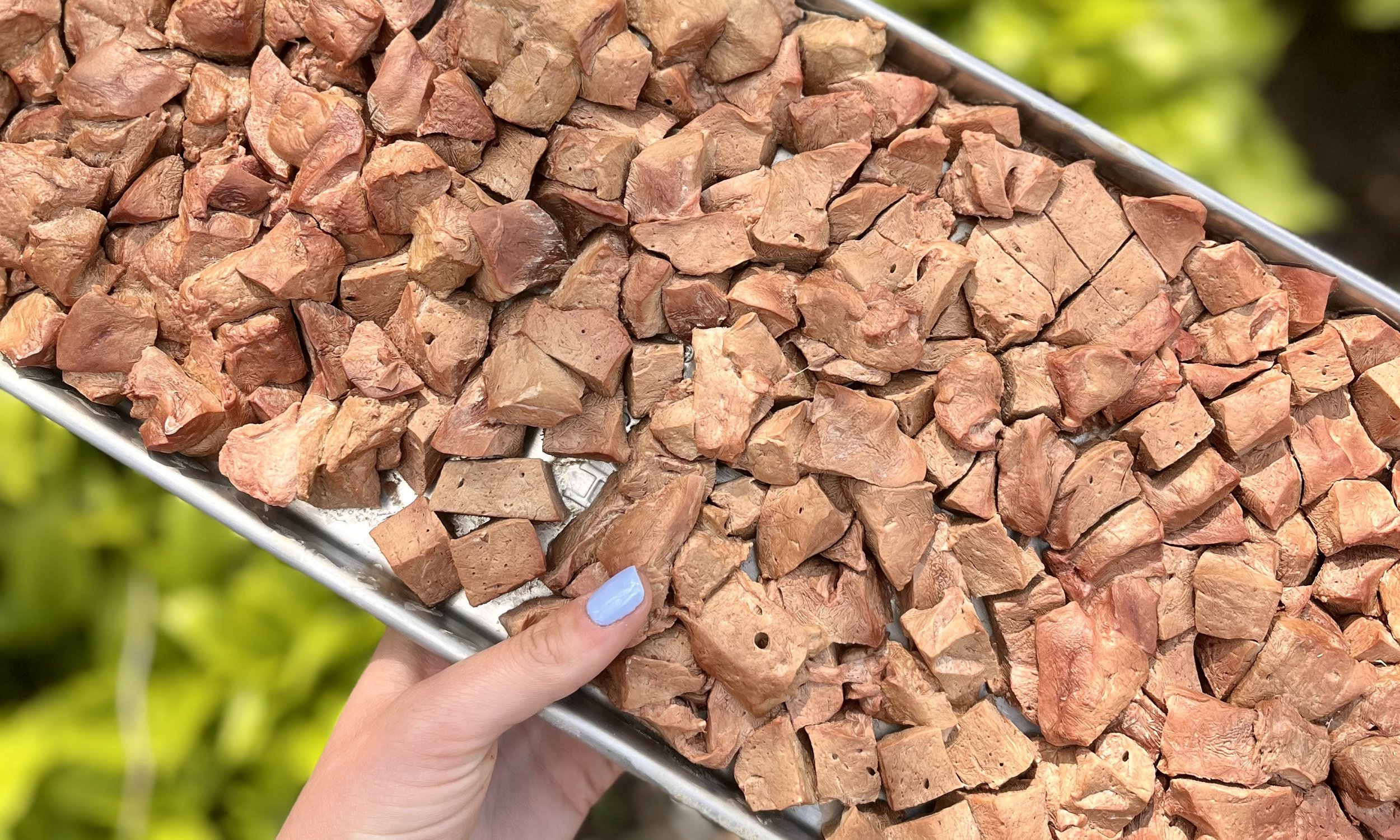
Why Single-Ingredient Treats Matter for Sensitive Dogs
During an elimination trial, even small amounts of a reactive protein can cause flare-ups. Strict dietary compliance is essential for accurate diagnosis [2].
That means:
No multi-protein treats
No vague “natural flavor”
No hidden fillers
Single-ingredient treats make it easier to:
Identify triggers
Avoid cross-contamination
Support elimination trials
Reduce inflammatory load
When you’re troubleshooting chronic itching or ear infections, simplicity becomes powerful.
The Gut–Immune Connection
A significant portion of immune regulation occurs in the gastrointestinal tract. The Merck Veterinary Manual explains that food allergies involve immune responses triggered through the digestive system [1].
When dietary triggers are minimized, the overall inflammatory burden on the body may decrease.
This doesn’t mean environmental allergies aren’t real; they absolutely are. But supporting gut health and reducing dietary triggers may help lower immune system stress.
What to Look for in Safe Treats for Dogs With Food Allergies
If your dog struggles with chronic itching, paw licking, or recurring ear infections, prioritize:
1. One Clearly Identified Protein
No blends.
2. Novel Protein Sources
Especially if chicken or beef has been fed for a long time [1][3].
3. Minimal Processing
Highly processed treats often contain artificial additives and fillers.
The American Veterinary Medical Association’s dog nutrition guidance emphasizes the importance of appropriate ingredient selection and veterinary consultation when managing dietary concerns [4].
Examples of Novel, Single-Ingredient Options
For dogs needing alternative proteins, options may include rabbit-based treats, freeze-dried quail, or lamb chews.
At H&N Homestead, we focus on single-ingredient, whole-animal treats sourced transparently and produced without fillers or artificial preservatives.
For example, our rabbit products are made from a single novel protein and are commonly chosen by owners managing sensitivities. We also offer freeze-dried quail options and lamb treats for dogs needing protein rotation.
Our focus on rabbit began after our own rescue dog struggled with sensitivities — something we share more about in “How H&N Homestead Began”.
The goal isn’t trendy ingredients. It’s clarity, transparency, and intentionality.

How to Introduce New Treats Safely
If you suspect food sensitivities:
Introduce one new protein at a time
Wait 48–72 hours before adding anything else
Monitor itching and ear health
Keep a food journal
Strict elimination protocols are necessary for accurate identification of allergens [2].
Even small exposures can affect results.
References
[1] Merck Veterinary Manual — Allergies in Dogs
[2] American College of Veterinary Dermatology — Official Site
[3] American Kennel Club — Dog Food Allergies Guide
[4] American Veterinary Medical Association — Dog Nutrition Tips