The Dental Benefits of Natural Chews for Dogs
When we think about our dogs’ dental health, most of us picture bad breath, yellowing teeth, or the occasional reminder from the vet that “we should really be brushing more.” In reality, dental disease is one of the most common health issues in dogs, and it often starts quietly, long before obvious symptoms show up.
The good news? Supporting your dog’s oral health doesn’t have to mean daily brushing battles or relying on heavily processed dental products. One of the most effective (and natural) ways to help keep your dog’s teeth clean is something dogs already love to do: chew.
Let’s take a closer look at the dental benefits of natural chews, how they work, and how to choose the right option for your dog.
Why Dental Health Matters More Than You Think
According to the American Veterinary Dental College, most dogs show signs of periodontal disease by the age of three. Plaque buildup can harden into tartar, leading to gum inflammation, tooth loss, pain, and even infections that affect organs.
Dental disease isn’t just about bad breath; it’s a whole-body health issue. And while brushing is considered the gold standard, it’s not always realistic for every household or every dog. That’s where natural chews come in as a powerful supporting tool.
How Chewing Supports Canine Dental Health
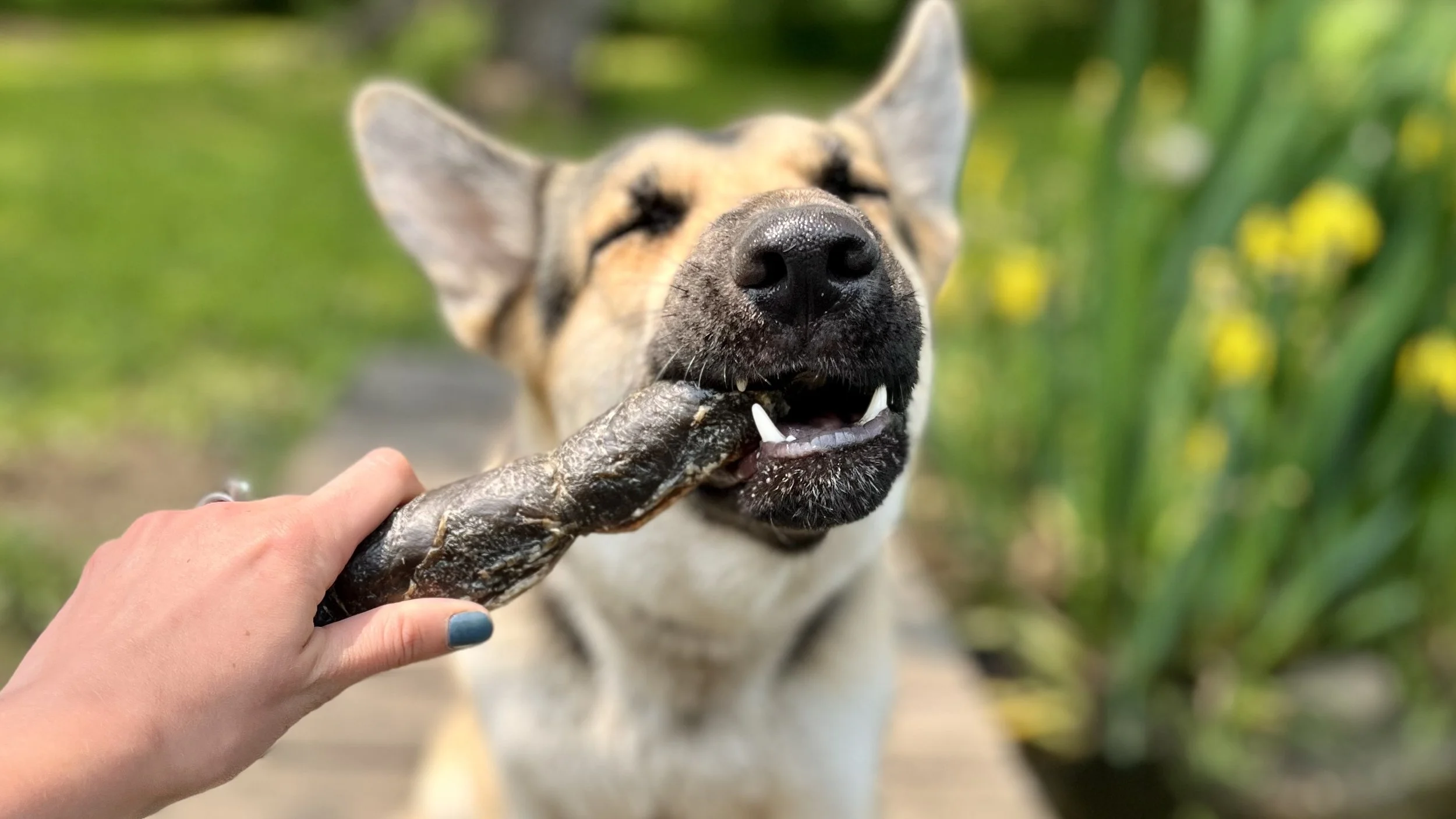
Chewing plays a critical role in oral health because of mechanical action. When a dog chews on a firm, textured surface, that friction helps scrape plaque off the teeth before it has a chance to harden into tartar.
Research published in the Journal of Veterinary Dentistry highlights the importance of mechanical abrasion in reducing plaque accumulation. Simply put: the act of chewing itself matters.
Chewing also stimulates saliva production. Saliva helps wash away food particles and naturally buffers bacteria in the mouth, creating a healthier oral environment overall.
What Makes a Chew “Dental”?
Many products on the market are labeled as “dental chews,” but not all chews provide meaningful dental benefits.
Some rely heavily on:
Sugars or starches
Flavor coatings
Chemical additives designed to freshen breath rather than clean teeth
Veterinary nutrition experts, including those at Tufts University’s Cummings School of Veterinary Medicine, have noted that dental claims don’t always reflect real-world effectiveness, especially when chewing time is minimal.
A truly dental-supportive chew focuses on:
Texture and resistance
Chewing duration
Simple, transparent ingredients
This is where natural chews really shine.
The Dental Benefits of Natural Chews
Natural chews support dental health in a way that closely mimics how dogs evolved to use their teeth. Instead of dissolving quickly or relying on coatings, they encourage sustained chewing that physically cleans the teeth.
Some of the key dental benefits of natural chews include:
Reduced plaque buildup through mechanical scraping
Slower tartar formation
Increased saliva flow
Better gum stimulation
Longer engagement, which improves effectiveness
Because natural chews are typically single-ingredient and minimally processed, they also avoid many of the fillers and binders found in conventional dental treats.
Types of Natural Chews and Their Dental Benefits
Not all natural chews are the same, and different textures offer different benefits depending on your dog’s chewing style and needs.
Rabbit Hide Chews
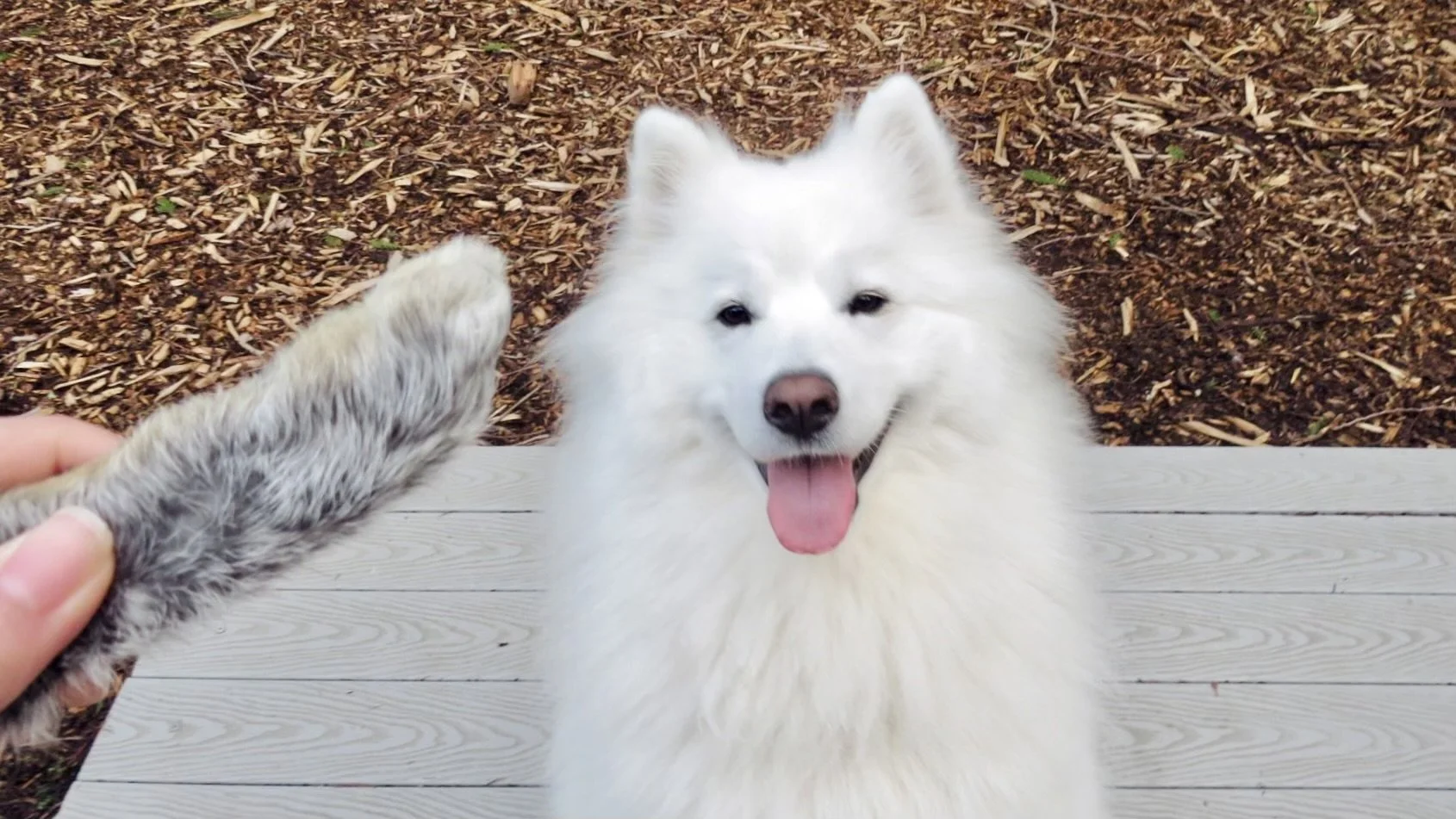
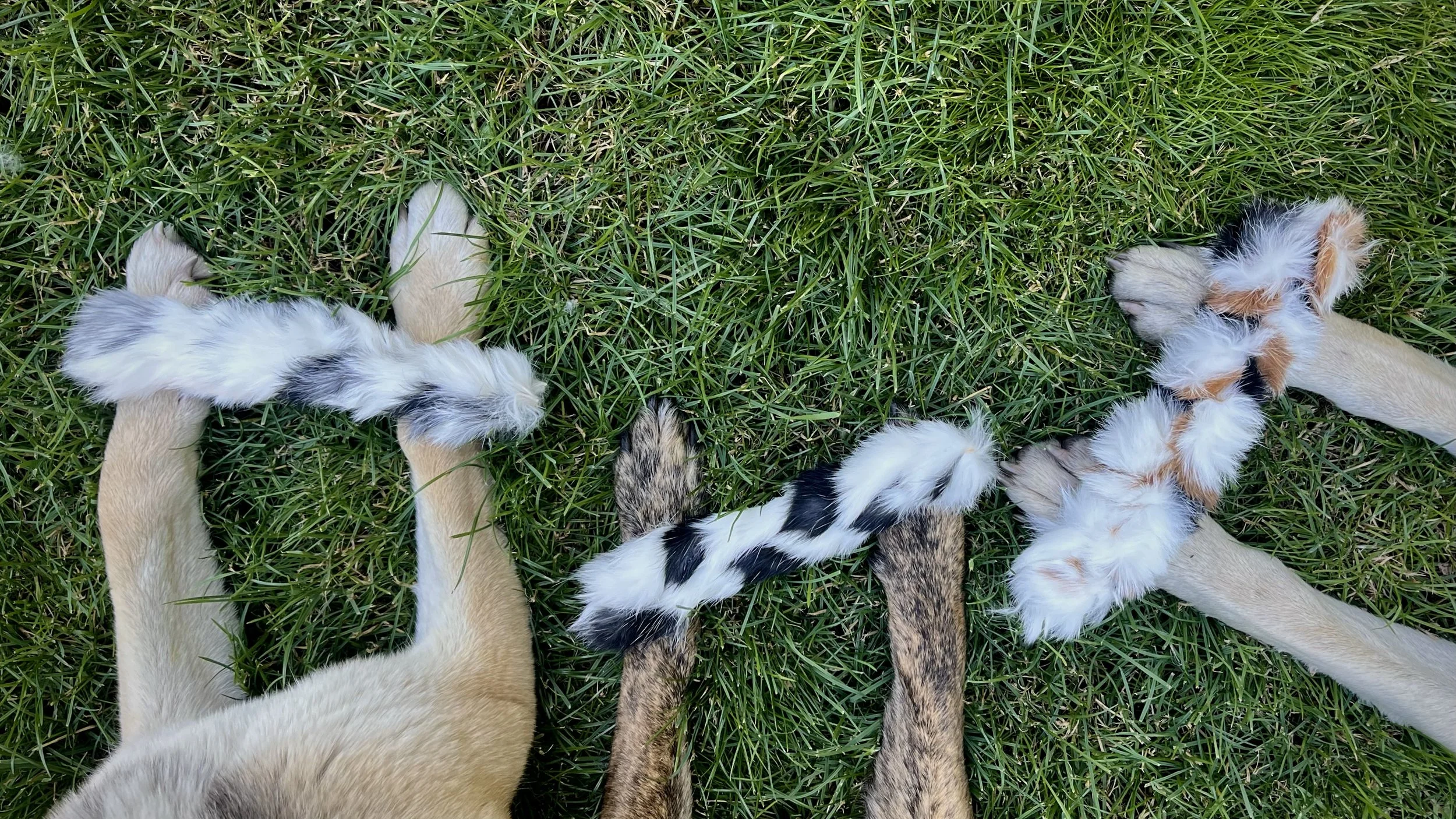
Rabbit hide chews offer an excellent balance of durability and digestibility. Their fibrous texture encourages prolonged chewing, which helps mechanically clean teeth and massage the gums. When hair is left on the hide, it can provide an additional mild abrasive action during chewing, gently contacting the surface of the teeth. Because they’re naturally tough without being overly hard, rabbit hide chews are a great option for many dogs, including those on raw or limited-ingredient diets and those with allergies.
Rabbit Ears
Rabbit ears are a gentler chew option that still provides dental benefits. The combination of cartilage and fur creates mild abrasive action, helping clean teeth while being easier on puppies, seniors, and lighter chewers. They’re a great choice for dogs who enjoy chewing but don’t need something extremely long-lasting.
Beef Hide Chews
For stronger chewers, our beef hide chews provide increased resistance and longer chewing time, which means more opportunity for plaque to be removed through natural friction. We keep these chews simple and minimally processed, so dogs who need something tougher can still enjoy a natural option that supports dental health.
Antler Chews (With Care)
Antlers are extremely long-lasting and can help keep dogs occupied while encouraging jaw engagement. Because they are very hard, they’re best suited for experienced chewers and should always be offered under supervision. The American Kennel Club recommends choosing chews appropriate for your dog’s size and chewing style to reduce the risk of tooth damage.
Choosing the Right Chew for Your Dog
When selecting a natural chew for dental health, consider:
Your dog’s size and jaw strength
Chewing intensity (gentle vs power chewer)
Age and dental condition
Digestive sensitivity
A chew that’s too soft won’t provide much cleaning action, while one that’s too hard can increase the risk of cracked teeth. Matching the chew to the dog is just as important as the chew itself.
The FDA’s animal safety guidelines also emphasize supervision during chewing to reduce choking or breakage risks.
How Often Should Dogs Chew for Dental Benefits?
Consistency matters more than occasional long sessions. Regular chewing, even a few times per week, can help slow plaque buildup when paired with other good habits.
Natural chews work best as part of a broader dental care routine that may include:
Periodic brushing
Routine veterinary dental checks
A balanced, species-appropriate diet
While no chew can completely replace brushing, many veterinarians agree that chewing plays a valuable supporting role in oral health (Merck Veterinary Manual).
FAQ: Dental Benefits of Natural Chews
Do natural chews actually clean dogs’ teeth?
Yes. Natural chews clean teeth through mechanical abrasion, helping remove plaque before it turns into tartar.
Are natural chews safer than processed dental chews?
When properly sized and supervised, natural chews avoid many additives and fillers found in processed products. Therefore, making them safer.
Are fur-on chews safe for dogs?
Fur-on chews are safe and can even aid digestion. As always, supervision is important.
Can puppies have natural chews?
Yes, but softer options like rabbit ears are usually best for developing teeth.
How long should a dental chew last?
Longer chewing sessions generally provide more dental benefit, but duration varies by chew type and dog.
Are natural chews suitable for raw-fed dogs?
Yes. Natural, single-ingredient chews fit well into raw and whole-food feeding approaches.
Supporting Dental Health the Natural Way
Dental care doesn’t have to be complicated or stressful. By choosing natural chews that encourage real chewing, you’re working with your dog’s instincts, not against them.
Simple ingredients, thoughtful sourcing, and the right texture can go a long way toward supporting healthier teeth, gums, and overall well-being.
Sources & Further Reading
American Veterinary Dental College (AVDC): https://avdc.org
Journal of Veterinary Dentistry: https://journals.sagepub.com/home/jvd
Tufts University – Petfoodology: https://vetnutrition.tufts.edu
Cornell University College of Veterinary Medicine: https://www.vet.cornell.edu
World Small Animal Veterinary Association (WSAVA): https://wsava.org
Merck Veterinary Manual: https://www.merckvetmanual.com
American Kennel Club – Chew Safety: https://www.akc.org
FDA – Animal & Veterinary Safety: https://www.fda.gov/animal-veterinary